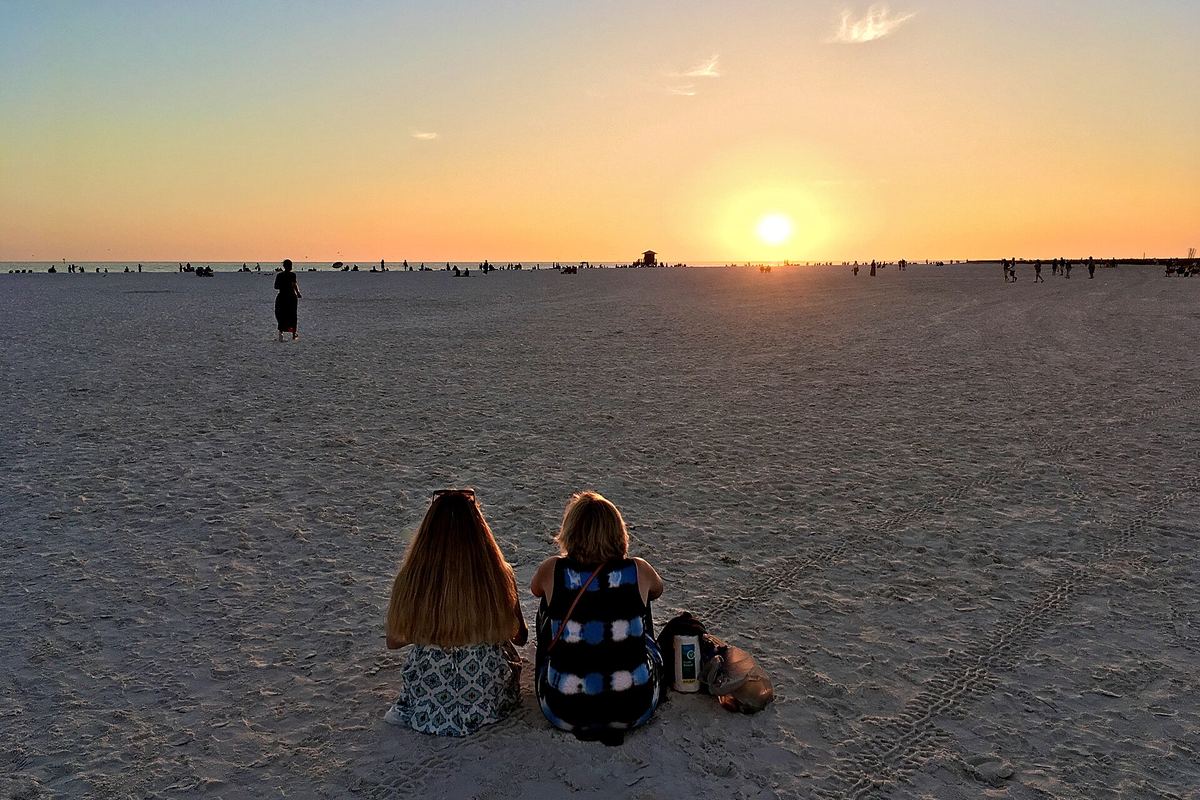
Sarasota has a real high season, driven by snowbirds and school breaks. Here's how the year actually breaks down, and how to pick the right window for your trip.
| Season | Months | Weather | Crowds & prices |
|---|---|---|---|
| Peak | Jan – Apr | Dry and sunny, highs in the 70s to low 80s°F; the Gulf is cool in Jan–Feb | Highest; book hotels 2–3 months out |
| Shoulder | May, late Oct – Dec | Warm, with lower humidity than summer | Quieter, with lower rates; the best value |
| Summer | Jun – Sep | Hot and humid, with short afternoon storms; the Gulf feels like bathwater | Lowest rates, thinnest crowds |
| Hurricane season | Jun 1 – Nov 30 | Peak risk Aug – Oct | Watch forecasts and consider travel insurance |
If you want the classic Sarasota weather
January through April is the brochure version of Sarasota: dry, sunny, warm without being sticky. It's also when hotel rates run highest, restaurants have waits, and the Siesta Beach lot fills earliest. In January and February, the Gulf can feel brisk, too cool for some swimmers.
If you want the best value
May, and late October through early December, are the sweet spots. The water is warm, the summer humidity hasn't set in yet (or has just broken), rates drop from peak, and the beaches are much less crowded on weekdays.
If you're watching a budget
June through September has the lowest rates by a clear margin. The trade-offs are real heat and humidity, frequent but usually brief afternoon thunderstorms, and hurricane season. Plan beach time for mornings, and save museums for the stormy hours.
Red tide
Red tide is an algae bloom that can irritate your eyes and throat at the beach. It can happen any time of year and varies beach to beach. Check the FWC red tide status map the week of your trip. If one beach is affected, another a few miles away is often clear.